For nearly a decade, Alliance REIT has shared its market perspective directly with our investors through regular newsletters. What follows draws on those communications and the convictions that have guided our strategy since 2016. We have written for years about the structural undersupply of well-located freehold rental housing in Toronto, the risks of speculative condominium development, and the opportunity we believed was coming.
The market has largely played out as we anticipated. At the beginning of the cycle in 2023, we wrote: “The segment most adversely affected is the condominium market as there is an oversupply. The same cannot be said for freehold properties close to the core. With rates decreasing and the political landscape normalising, well located freehold properties will continue to outperform.”
The Backdrop: A Market Shaped by Speculation
The early 2020s produced one of the most significant condominium oversupply events the city has seen. Fuelled by speculative development, thousands of new condominium units came to market in a compressed period of time. When interest rates rose sharply and buyer sentiment shifted, many of those individual condo investors found themselves unable to sell and turned to renting instead, flooding the market with discounted inventory.
The effect on the broader GTA rental market was real and measurable. Renters, suddenly presented with more choices, could leave an older apartment for a new condominium at the same or lower price. This put downward pressure on rents across the market and created the narrative that has dominated headlines: the Toronto rental market is in decline.
That narrative is not wrong. But it is incomplete.
A Product That Was Already Undersupplied
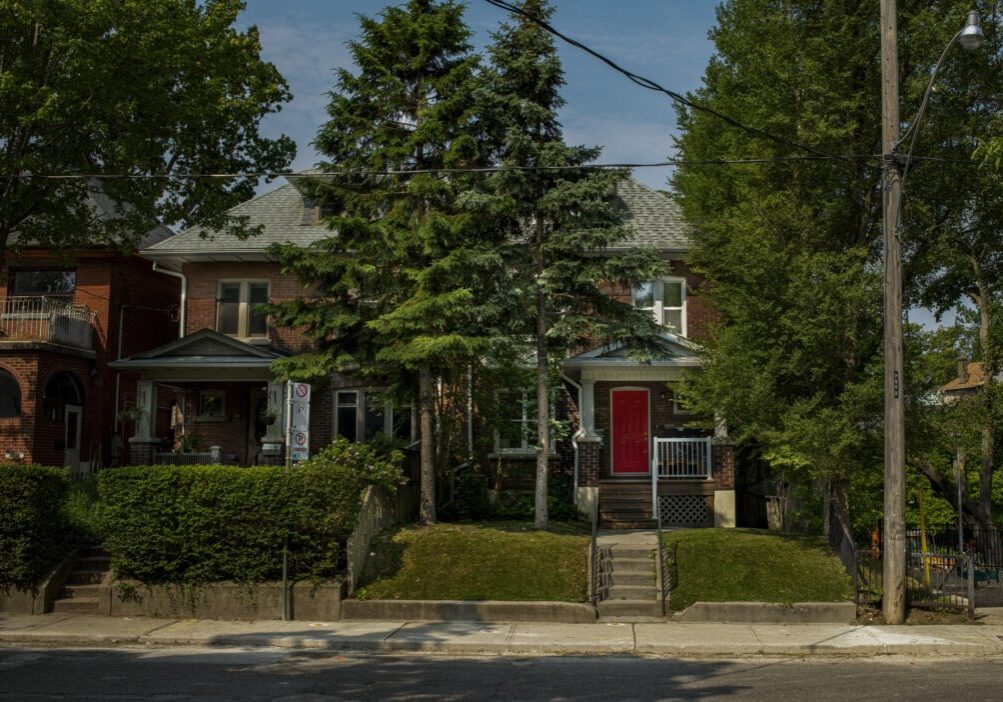
The condominium market can be overbuilt. Towers can be added relatively quickly in response to demand signals. Freehold rental properties in established, walkable neighbourhoods near the Toronto core cannot.
These assets are scarce by nature. The land is finite, the neighbourhoods are established, and the approval and development timelines are long. Even as the broader city grapples with a housing shortage, the supply of well-located boutique freehold rental units has not kept pace with demand.
The City of Toronto has begun to acknowledge this reality through policy. In 2023, city council passed legislation allowing up to four residential units on any residential property across Toronto, a significant shift from a zoning framework that had, for decades, restricted large portions of the city to single-family use. More recently, the city approved as-of-right zoning for buildings of up to six storeys along major streets. These are precisely the streets and neighbourhoods where Alliance has been building for years, not because the policy arrived and we followed, but because we believed in the direction of the city long before the legislation confirmed it.
Why Demand Here Doesn’t Behave Like Demand Elsewhere
The neighbourhoods that define this asset class are established, walkable communities close to the urban core that represent something that cannot be easily replicated. These are places where residents can walk to a coffee shop, a park, a school. Where the street has character. Where a building has history. Where a family can put down roots without sacrificing access to the city.
This is not a demographic fringe. It is where a large and growing portion of Toronto’s professional population wants to live. Return-to-office mandates continue to reinforce this, as people who need to be in the city several days a week increasingly want to live near it. As condominium rents normalise upward once the current oversupply is absorbed and with practically no new condominium development currently underway, the relative value of quality freehold rental in these neighbourhoods will only become more apparent.
The product attracts a different kind of resident: discerning, stable, community-oriented tenants who stay. That stability is not incidental to performance. It is central to it.
The Long View
We do not try to predict market timing. What we do believe, grounded in nearly a decade of operating in this city, is that the structural conditions shaping this asset class are durable.
When Alliance was founded in 2016, the thesis was straightforward: well-located freehold rental properties in Toronto’s most established neighbourhoods were undersupplied, undervalued as an investment asset, and positioned for durable long-term demand. The zoning changes that followed, the policy response to the housing shortage, and the performance of these assets through one of the most volatile market periods in recent memory have all reinforced what we believed from the start.
The undersupply of well-located freehold rental housing near the Toronto core will not be resolved quickly. The city has taken important steps to enable more supply, but supply takes time. In the interim, properties that are already built, already occupied, and already operating at strong economics will continue to benefit from demand that has nowhere else to go.
Until supply meaningfully closes the gap, freehold rental near the core will continue to behave differently than the rest of the market. It is what the data has shown, cycle after cycle, and what the fundamentals continue to support.